

Low Rates.
Our rates are low, our application is quick and easy! We can get you clear to close in as little as 10 days!
Trusted By Agents With








Meet Bill Rapp
NMLS ID # NMLS # 228246
Bill Rapp, CCIM is a Houston-based Capital Advisor at Medallion Funds, specializing in commercial real estate finance and strategic lending solutions. With over two decades of experience across brokerage and capital markets, Bill has worked with leading firms including eXp Commercial, NEXA Mortgage, Viking Enterprise LLC, and Sun Realty Houston.
A graduate of Texas A&M University with a BBA in Finance, Bill brings a disciplined, underwriting-first approach to every deal. His expertise spans commercial and residential financing, including asset-based lending, FHA financing, reverse mortgages, REO properties, and investment strategies for both single-family and commercial assets.
Known for his focus on structure over rate, Bill helps investors, business owners, and developers navigate complex transactions with clarity, precision, and a long-term wealth-building mindset.


The Client Experience
Great experience purchasing our first home! Bill was easy to reach and always able to answer any questions or concerns.



Loan Programs Available




Blogs
The Top 5 Mortgage Mistakes to Avoid

Buying your first home can be both exciting and nerve-wracking at the same time. With so many things to consider and....
Mortgage Do and
Do not list

Mortgages can be tricky, and it's easy to make mistakes that can end up costing you dearly. That's why we've put together this list....
Tips On How To Improve Your Credit Score

Let's talk about some ways you can improve your credit score! Your credit score is actually a big deal, and it can affect...
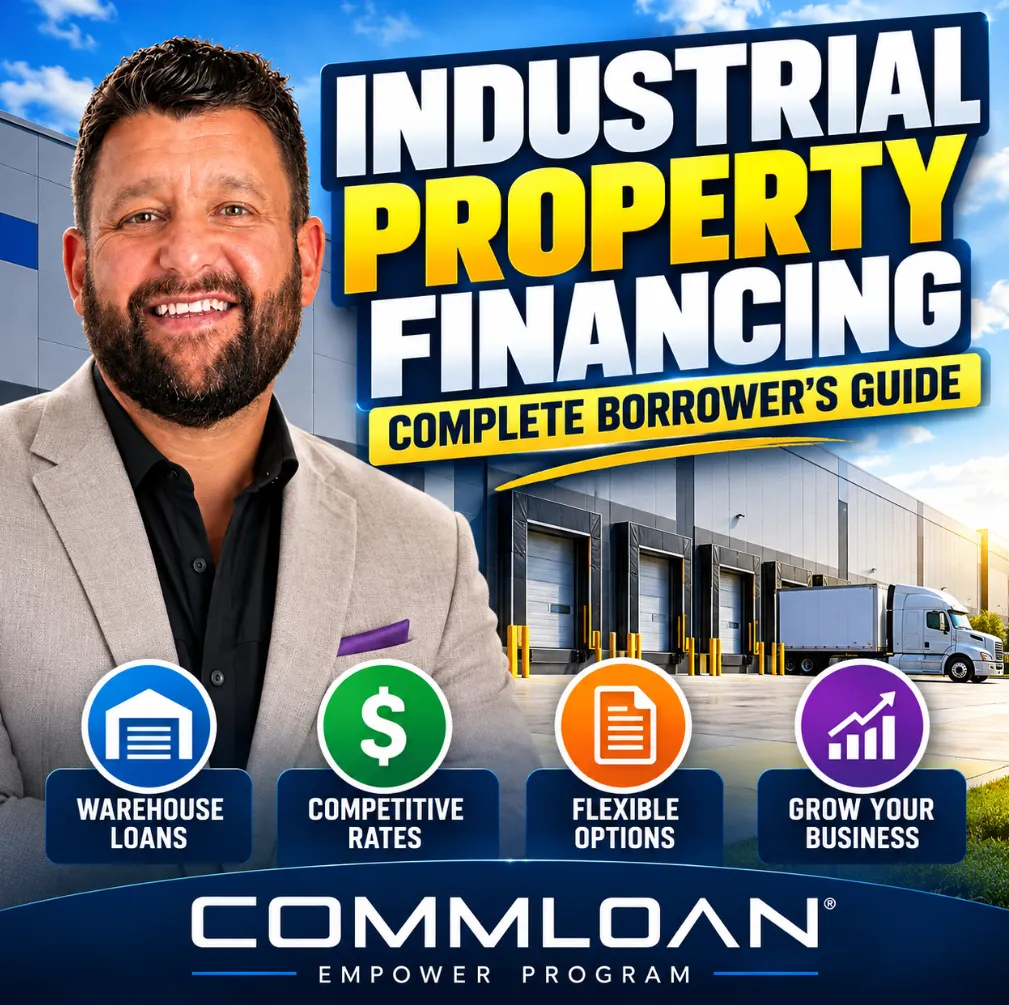
🏭 Industrial Property Financing: Complete Guide 💰
🏭 Industrial Property Financing: Complete Guide 💰
🏢 Industrial Real Estate Loans Explained 🔑
________________________________________________________________________________
Industrial Property Financing: Complete Borrower's Guide
Everything Investors and Business Owners Need to Know About Industrial Real Estate Loans
Industrial real estate has become an important asset class for commercial property investors, manufacturers, distributors, contractors, and growing businesses.
From distribution warehouses and manufacturing facilities to contractor yards, flex industrial buildings, and logistics centers, industrial properties serve a wide range of business needs.
But financing an industrial property is not the same as financing a residential home or even a traditional office building.
Lenders evaluate property functionality, tenant creditworthiness, operating cash flow, environmental conditions, borrower financial strength, and the intended use of the property.
Understanding these requirements can help borrowers structure stronger financing requests, avoid costly delays, and select loan programs that align with their business objectives.
In this guide, I'll explain how industrial property financing works, which loan programs are available, how lenders evaluate industrial properties, and what borrowers should do before applying.
I'm Bill Rapp, CCIM, with the CommLoan Empower Program, where I help commercial real estate investors and business owners navigate commercial mortgage financing through a marketplace of lending options.
What Is Industrial Property Financing?
Industrial property financing refers to commercial mortgage loans used to purchase, refinance, construct, renovate, or improve real estate designed primarily for industrial and business operations.
Common property types include:
Distribution and logistics warehouses
Manufacturing facilities
Flex industrial and office-warehouse properties
Contractor warehouses and service facilities
Cold storage and refrigerated warehouses
Light industrial buildings
Truck terminals and transportation facilities
Industrial outdoor storage properties
Research and production facilities
Multi-tenant industrial business parks
Each property type presents different financing considerations.
For example, a modern distribution warehouse with a long-term national tenant may qualify for different financing terms than an older manufacturing facility with specialized equipment or environmental concerns.
The key is matching the property and borrower to the right lending program.
1. Industrial Property Loan Options
There is no single industrial real estate loan that works for every borrower.
The best financing structure depends on whether the property is owner-occupied or investment-owned, its cash flow, the borrower's financial strength, and the intended business plan.
Conventional Bank Loans
Traditional banks and credit unions finance many stabilized industrial properties and owner-occupied facilities.
Typical characteristics may include:
Loan-to-value ratios around 65%–80%
Amortization periods of 15–25 years
Fixed-rate periods or floating-rate structures
Balloon maturities or periodic renewals
Personal guarantees, depending on the transaction
Banks generally favor financially strong borrowers, proven cash flow, and properties that are readily marketable.
However, some banks have concentration limits or restrictions on certain industrial uses.
SBA 7(a) Loans
The SBA 7(a) program can be attractive for eligible small businesses purchasing or improving owner-occupied industrial real estate.
Potential benefits include:
Financing for qualifying real estate purchases
Eligible renovation and improvement costs
Potential financing of certain business-related expenses
Longer repayment terms for qualifying real estate
Lower equity requirements than some conventional loans
SBA 7(a) loans generally have a maximum loan amount of $5 million, subject to program requirements.
For an existing building, the operating business generally must occupy at least 51% of the property to satisfy SBA owner-occupancy requirements.
SBA loans are not intended for passive real estate investment.
SBA 504 Loans
The SBA 504 program is another financing option for qualifying businesses purchasing or constructing owner-occupied industrial facilities.
A common structure involves:
Approximately 50% financing from a third-party lender
Up to 40% through a Certified Development Company-backed SBA 504 loan
At least 10% borrower equity
Additional equity may be required for startups or special-purpose properties.
SBA 504 financing can be particularly useful for manufacturers, warehouse operators, contractors, and other eligible businesses seeking long-term occupancy.
Commercial Mortgage Marketplace Financing
Some borrowers need financing beyond what their local bank can offer.
A commercial mortgage marketplace can help identify lenders with different underwriting criteria, property preferences, geographic coverage, and loan structures.
Through the CommLoan Empower Program, borrowers can explore financing options across a broad commercial lending marketplace.
This approach may be especially valuable when a transaction involves unusual industrial property characteristics, a bank concentration issue, or a more complex capital structure.
Bridge Loans
Bridge financing provides short-term capital for properties that may not yet qualify for permanent financing.
Examples include:
Vacant industrial properties requiring lease-up
Buildings undergoing renovation
Properties with deferred maintenance
Acquisitions requiring a fast closing
Transitional industrial investments
Properties being repositioned for new tenants
Bridge loans often feature interest-only payments and shorter maturities, commonly around 12–36 months.
They typically carry higher borrowing costs and require a credible exit strategy.
Industrial Construction Loans
Industrial construction financing supports the development of new warehouses, manufacturing buildings, logistics facilities, and other industrial improvements.
Lenders evaluate:
Land acquisition costs
Development budgets
Construction contracts
Contractor experience
Zoning and entitlements
Project feasibility
Borrower liquidity
Lease commitments or owner-occupancy plans
Stabilized value and permanent financing options
Construction financing may involve interest-only payments during construction, with repayment or conversion upon completion.
2. How Much Down Payment Do You Need?
One of the most common questions I hear is:
"How much money do I need to buy an industrial building?"
The answer depends on the loan program, borrower profile, and property.
Here are illustrative ranges:
Financing Type | Typical Borrower Equity |
Conventional industrial mortgage | 20%–35% |
SBA 7(a) owner-occupied property | Often 10% or more, depending on structure |
SBA 504 owner-occupied property | Generally 10%–20% |
Industrial bridge loan | Often 25%–40% |
Industrial investment property | Commonly 25%–35% |
Industrial construction loan | Project-specific, often 20%–35% or more |
These are planning estimates, not guaranteed loan terms. Some SBA transactions may have different equity requirements depending on eligibility, acquisition structure, and lender policy.
Borrowers should also budget for closing costs, appraisal fees, environmental reports, reserves, and potential capital improvements.
3. How Lenders Underwrite Industrial Properties
Industrial mortgage underwriting involves much more than checking a borrower's credit score.
Debt Service Coverage Ratio
For income-producing industrial properties, lenders evaluate the debt service coverage ratio, or DSCR.
DSCR = Net Operating Income ÷ Annual Debt Service
For example:
Annual NOI: $300,000
Annual debt service: $240,000
DSCR: 1.25x
A 1.25x DSCR means the property generates $1.25 in net operating income for every $1.00 of annual debt payments.
Many lenders target DSCR levels around 1.20x–1.35x or higher, depending on the property, market, and loan program.
Owner-occupied industrial loans may also be underwritten using business cash flow and global debt service coverage.
Loan-to-Value Ratio
Loan-to-value, or LTV, measures the loan amount relative to the property's appraised value.
LTV = Loan Amount ÷ Appraised Property Value
For example, a $2.25 million loan secured by a $3 million property represents 75% LTV.
Higher LTV generally increases lender risk and may affect loan pricing or approval.
Tenant Quality and Lease Structure
For investment properties, lenders examine:
Tenant creditworthiness
Lease expiration schedules
Rent payment history
Tenant concentration
Renewal options
Rent escalations
Vacancy and downtime assumptions
Expense reimbursement provisions
A warehouse leased to a financially strong tenant for ten years may present a different risk profile than a multi-tenant industrial property with multiple near-term lease expirations.
Property Functionality
Industrial buildings are evaluated for practical usability.
Important factors include:
Clear ceiling height
Dock-high and grade-level loading
Truck court dimensions
Trailer access
Electrical capacity
Building age and condition
Sprinkler and fire protection systems
Parking and outdoor storage
Zoning and permitted uses
Marketability to replacement tenants
An industrial building may look attractive on paper but face financing challenges if its physical characteristics limit alternative uses.
4. Environmental Due Diligence Is Critical
Industrial properties often require additional environmental scrutiny.
Depending on historical uses, lenders may request a Phase I Environmental Site Assessment.
Potential concerns include:
Petroleum contamination
Underground storage tanks
Chemical storage
Historical manufacturing activities
Hazardous material handling
Soil or groundwater contamination
Prior industrial operations
If a Phase I identifies recognized environmental conditions, additional investigation may be required.
Environmental issues can affect financing, insurance, remediation obligations, and the property's resale value.
My recommendation: Investigate environmental history early rather than waiting until the loan is approaching closing.
5. Owner-Occupied vs. Investment Industrial Financing
One of the most important distinctions is whether the borrower will operate a business from the building or lease the property to tenants.
Owner-Occupied Industrial Properties
These properties are used primarily by the borrower's operating business.
Examples include:
A plumbing company purchasing its warehouse
A manufacturer acquiring a production facility
An electrical contractor buying an office-warehouse building
A distributor purchasing a logistics facility
Eligible borrowers may qualify for SBA financing or conventional business real estate loans.
Investment Industrial Properties
These properties are purchased primarily to generate rental income.
Examples include:
Single-tenant distribution warehouses
Multi-tenant flex industrial parks
Industrial sale-leaseback investments
Speculative warehouse acquisitions
Investment financing focuses more heavily on rental income, tenant quality, lease terms, occupancy, and property value.
Traditional SBA owner-occupied real estate programs generally are not available for passive investment properties.
6. Industrial Property Financing Example
Consider a growing distribution company currently leasing warehouse space.
The company identifies a suitable industrial building priced at $3 million.
Assume it qualifies for a conventional commercial mortgage with the following illustrative terms:
Item | Amount |
Purchase price | $3,000,000 |
Down payment (25%) | $750,000 |
Loan amount | $2,250,000 |
Illustrative interest rate | 7.25% |
Amortization | 25 years |
Estimated monthly principal and interest | $16,263 |
Estimated annual debt service | $195,156 |
These figures exclude property taxes, insurance, maintenance, reserves, and closing costs. The interest rate is hypothetical, not a current lender quote.
Now compare this structure with the company's existing lease obligations.
Owning the building may offer potential advantages, including principal reduction, control over occupancy, possible appreciation, and long-term business stability.
However, ownership also creates obligations for maintenance, property taxes, insurance, and capital expenditures.
The correct decision requires evaluating total occupancy costs, business cash flow, opportunity cost of equity, and future property value—not simply comparing rent with the mortgage payment.
7. Documents Needed for Industrial Property Financing
Borrowers should prepare documentation before approaching lenders.
For investment properties, common requirements include:
Current rent roll
Existing leases and amendments
Trailing 12-month operating statement
Historical income and expenses
Property photos
Purchase contract or refinance details
Borrower financial statements
Real estate owned schedule
Entity organizational documents
Property insurance information
For owner-occupied properties, lenders may additionally request:
Business tax returns
Interim business financial statements
Business debt schedule
Personal financial statements
Ownership information
Business operating history
Cash flow projections, when applicable
Construction transactions require additional development budgets, plans, contracts, and feasibility information.
Complete documentation can improve underwriting efficiency and reduce avoidable delays.
8. Common Industrial Financing Mistakes
Mistake #1: Choosing a Lender Before Understanding the Property
Different lenders have different industrial property preferences.
A lender comfortable with distribution warehouses may not finance specialized manufacturing facilities or outdoor storage properties.
Mistake #2: Ignoring Environmental Risks
Environmental concerns can delay closing or make a property ineligible for certain financing programs.
Mistake #3: Underestimating Capital Improvements
Roof replacement, pavement repairs, loading dock upgrades, and electrical improvements can materially affect the total project budget.
Mistake #4: Focusing Only on the Interest Rate
Borrowers should compare the entire financing structure, including fees, amortization, recourse, prepayment penalties, reserves, and maturity dates.
Mistake #5: Waiting Too Long to Explore Financing
Early lender engagement can identify potential problems before borrowers incur substantial due diligence expenses.
9. Why Work With the CommLoan Empower Program?
Industrial property financing is rarely one-size-fits-all.
A local bank may offer an attractive conventional mortgage, while another lender may provide better flexibility for a transitional property, an unusual building type, or a borrower with a specialized business model.
Through the CommLoan Empower Program, I help borrowers explore commercial real estate financing solutions based on their objectives, property characteristics, and financial qualifications.
The goal is not simply to obtain a loan.
It is to identify financing that supports the investment strategy, operating business, and long-term ownership plan.
Frequently Asked Questions
Can I finance an industrial warehouse with an SBA loan?
Yes, eligible businesses may use SBA 7(a) or SBA 504 financing to acquire qualifying owner-occupied warehouse properties. Passive investment properties generally do not qualify.
What credit score is needed for industrial property financing?
There is no universal minimum. Requirements vary by lender and loan program. Credit history, liquidity, repayment capacity, and overall financial strength all matter.
Can I refinance an industrial property?
Yes. Depending on lender requirements, refinancing may be available to replace existing debt, adjust repayment terms, finance improvements, or access equity.
Can I finance a vacant industrial building?
Potentially. Lenders may consider the borrower's occupancy plan, business financial strength, leasing strategy, reserves, and projected property performance. Bridge financing may be appropriate for some transitional properties.
Are industrial mortgage rates higher than residential rates?
Commercial industrial mortgage pricing is determined by different risk factors, including loan structure, borrower strength, property type, and capital market conditions. Rates may be higher or lower depending on the specific transaction and market environment.
How long does industrial property financing take?
Timing varies significantly. Straightforward conventional transactions may close in several weeks, while SBA, construction, environmental, or complex financing transactions can take longer.
Final Thoughts: Finance the Property, Not Just the Purchase
Industrial real estate can provide investors and business owners with long-term opportunities, but the financing structure plays a major role in the outcome.
Whether you're purchasing a warehouse, refinancing a manufacturing facility, acquiring a multi-tenant flex property, or constructing a new distribution center, understanding lender requirements before applying can make the process more efficient.
The right industrial property financing strategy should support your cash flow, investment objectives, and long-term business plan.
Let's Discuss Your Industrial Property Financing Options
I'm Bill Rapp, CCIM, with the CommLoan Empower Program.
If you're considering an industrial real estate purchase, refinance, or construction project, I'd welcome the opportunity to review your financing objectives and help identify potential lending solutions.
Top of Form
Bottom of Form
Bill Rapp, CCIM
Director | CommLoan
📞 281-222-0433
📧 [email protected]
🌐 https://billrapp.commloan.com/
🌐 https://HoustonCommercialMortgage.com/
Commercial Real Estate Financing Nationwide
https://billrapp.commloan.com/
https://author.billrapponline.com/
https://www.amazon.com/dp/B0F32Z5BH2
https://veed.cello.so/FOmzTty6oi9
https://buymeacoffee.com/vikingente3
https://creplaybookseries.billrapponline.com
https://creplaybook.billrapponline.com/
©Bill Rapp, CCIM - Director - CommLoan

10 Tips for First-Time Homebuyers

Buying your first home can be both exciting and nerve-wracking at the same time. With so many things to consider and....
How To Choose the Right Lender for You

Lorem Ipsum is simply dummy text of the printing and typesetting industry. Lorem Ipsum has been the industry's standard dummy
Refinancing youe loan and when to do it

Lorem Ipsum is simply dummy text of the printing and typesetting industry. Lorem Ipsum has been the industry's standard dummy
Copyright ©2021 | Mortgage Viking Team
Licensed to Do Business | NMLS # 228246
This is not an offer to enter into an agreement. Not all customers will qualify. Information, rates and programs are subject to change without notice. All products are subject to credit and property approval. Other restrictions and limitations may apply. Copyright © 2021 | Medallion Funds
Corporate | NMLS ID NMLS # 1825831
Corporate Address : 2651 N. Green Valley Pkwy STE. 101 Henderson, NV 89014
Corporate NMLS NMLS # 1825831 | Company Website: https://medallionfunds.com/bill-rapp/
Copyright ©2021 | Mortgage Viking Team Licensed to Do Business | NMLS # 228246
This is not an offer to enter into an agreement. Not all customers will qualify. Information, rates and programs are subject to change without notice. All products are subject to credit and property approval. Other restrictions and limitations may apply
Corporate | NMLS ID NMLS # 1825831
Corporate Address : 2651 N. Green Valley Pkwy STE. 101 Henderson, NV 89014 https://medallionfunds.com/bill-rapp/
Facebook
Instagram
X
LinkedIn
Youtube
TikTok